 Deutsch
 Français
 Italiano
 Español
 Polski
 Nederlands
 Română
 Čeština
 Українська
 Português (Portugal)
 Ελληνικά
 Slovenčina
 Magyar
 Dansk
Dansk Lietuvių
 Türkçe
 Bahasa Indonesia
 Русский
 한국어
한국어 日本語
日本語 繁體中文
繁體中文 العربية
 فارسی
فارسی Português (Brasil)
 עברית
עברית Srpski
South Sudan election due 22 December, no voters registered yet
Updated
South Sudan is due to hold its first general election since independence in 2011 on 22 December 2026, voting for a president, a parliament and state governors. President Salva Kiir faces 4 declared challengers, and voter registration had not begun by 12 October.
- Tuesday · in 70 days
- 4declared challengers to President Kiir
- 270members in the next National Legislative Assembly
- 10states electing governors and assemblies
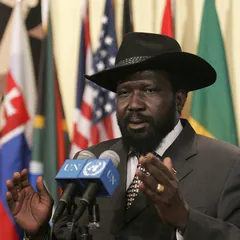 Salva KiirSudan People's Liberation Movement (SPLM)President since 2011
- KNKornelio Kon NguNational Alliance of Political PartiesFormer deputy speaker of parliament
- TATijwog AgwetIndependentReverend, former presidential adviser
- IMIssa Muzamil Sebit MakeleleNational Patriotic MovementLawyer, former chair of the Bar Association
- PMPeter Mayen MajongditPeople's Liberal PartyFormer minister of humanitarian affairs
- Voting day
- 22 December 2026
- Elected
- President, National Legislative Assembly, state governors and state assemblies
- Decided by
- More than half of the valid votes for president; otherwise a runoff between the top two within 60 days
- Voter registration
- Not begun by 12 October 2026; no start date announced
- Polling hours
- Not yet published by the National Elections Commission
- Who may vote
- Citizens aged 18 or older on 22 December 2026 who have registered
Who is running
Salva Kiir has led South Sudan since independence in 2011 and has never faced a vote. He is the candidate of the Sudan People's Liberation Movement (SPLM), the former rebel movement that governs the country.
Kornelio Kon Ngu, a deputy speaker of parliament until it was dissolved, declared on 31 August for the National Alliance of Political Parties. He says development is concentrated in the capital, Juba. Tijwog Agwet, a reverend and former presidential adviser on religious affairs, declared on 22 September as an independent and campaigns on peace, unity and public services.
Issa Muzamil Sebit Makelele, a lawyer and former chair of the South Sudan Bar Association, was endorsed on 23 September by his National Patriotic Movement, which did not sign the 2018 peace agreement. Peter Mayen Majongdit, a former minister of humanitarian affairs dismissed by Kiir in November 2022, leads the People's Liberal Party.
How the vote works
A candidate for president needs more than half of the valid votes to win in the first round. If nobody reaches that, the top two meet in a second round within 60 days.
Voters also elect the National Legislative Assembly, the lower house of parliament. A law signed in September cut it from 650 members to 270. Some seats are filled in geographical constituencies, some from party lists and some from lists reserved for women. Governors and assemblies are elected in the 10 states.
Registration is done in person and on paper. People without a national identity card or passport may use a certificate from their local chief, the National Elections Commission said on 12 October.
How the race got here
The election was first due in 2015 and has been postponed four times. A civil war began in 2013, and a peace agreement in 2018 created a power-sharing transitional government that was to end with a vote.
On 1 July 2026 parliament amended that agreement so that a national census and a permanent constitution are no longer required before the election. Opposition lawmakers challenged the legality of the change. On 22 September Kiir signed amendments to the election law and dissolved the transitional government, including parliament and the vice presidents.
Riek Machar, Kiir's long-time rival and leader of the main opposition party, the SPLM-in-Opposition, has been under house arrest since March 2025. He is on trial on charges of treason and murder, which he denies. His party opposes holding the vote in December.
What happens next
- Parliament drops census and constitution as conditions
- Kornelio Kon Ngu declares for president
- Kiir signs election law, dissolves transitional government
- Commission allows chiefs' certificates for registration
- Voting day
The National Elections Commission, chaired since September by Gabriel Bol Deng, has said it will announce the start of voter registration once materials reach the registration centres in the 10 states and 3 administrative areas. It has not published a timetable for nominating candidates or the hours of polling.
Under the amended law Kiir remains in office with full powers until a newly elected president takes office. No date for that has been announced.
Summarised automatically from the linked sources. Reuters · The EastAfrican · CGTN · Sudans Post · Sudans Post (2) · National Elections Commission of South Sudan · National Elections Commission of South Sudan (2) · Wikipedia
Photo: Salva Kiir: Photo Credit: Jenny Rockett, CC BY-SA 3.0, Wikimedia Commons (cropped)
