
 Deutsch
 Français
 Italiano
 Español
 Polski
 Nederlands
 Română
 Čeština
 Українська
 Português (Portugal)
 Ελληνικά
 Slovenčina
 Magyar
 Dansk
Dansk Lietuvių
 Türkçe
 Bahasa Indonesia
 Русский
 한국어
한국어 日本語
日本語 繁體中文
繁體中文 العربية
 فارسی
فارسی Português (Brasil)
 עברית
עבריתSerbia election on 25 October pits Vučić against student list
Voting day: (in 18 days) · Updated
Serbia elects all 250 members of its parliament, the National Assembly, on 25 October 2026. Aleksandar Vučić, who resigned as president to run for prime minister, faces a list formed by the student movement behind nearly two years of protests.
Serbia Parliamentary Election
Sunday, October 25, 2026 · in 18 days


Prime Minister of Serbia?
Monday, October 26, 2026 · in 19 days
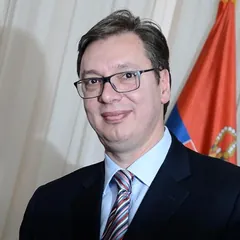
68% chance Aleksandar Vučić
▲5 pts in 7 days
Probability

29% chance Ilija Srdanović
▲8 pts in 7 days
Probability
Vladan Đokić 1% · Ana Brnabić 1%
The percentages on electiontracker.eu are market-implied probabilities: how likely each outcome is, as priced by prediction markets. They are not polls and not our forecast, and they are refreshed every few minutes. How to read these numbers
- Voting day
- 25 October 2026
- Polls close
- First results
- Preliminary, within 24 hours of polls closing
- Elected
- All 250 members of the National Assembly
- Decided by
- Proportional vote for lists; 3% threshold; 126 seats make a majority
- Takes office
- Government due within 90 days of the new assembly being constituted
Who is running
Aleksandar Vučić leads the list Aleksandar Vučić – United Serbia, built around the ruling Serbian Progressive Party (SNS), a right-wing party. He was president until 27 September 2026 and is the list's candidate for prime minister. It campaigns on living standards.
The Student List – Students Win comes from the student movement that has led protests against corruption since November 2024. First of its 250 candidates is Ilija Srdanović, a cardiologist and professor of medicine. Its programme centres on fighting corruption and crime. Several opposition parties, among them the Democratic Party, back it.
Ivica Dačić, leader of the Socialist Party of Serbia (SPS), heads a list of his party and three smaller ones. European Serbia, led by Marinika Tepić and Zdravko Ponoš, unites pro-European opposition parties. Seven lists represent national minorities.
How the vote works
Each voter chooses one list in a single nationwide constituency. The 250 seats are shared among the lists in proportion to their votes. A list needs at least 3% of the votes cast to win seats; lists of national minorities are exempt. A majority is 126 seats.
Polling stations open at 07:00 and close at 20:00 Central European Time, in Serbia and abroad. Only the parliament is elected on 25 October.
How the race got here
On 1 November 2024 a concrete canopy collapsed at the railway station in the city of Novi Sad, killing 16 people. Student-led protests demanding accountability for corruption followed and have continued for nearly two years.
On 9 September 2026 Vučić dissolved the parliament elected on 17 December 2023 and called the election, more than a year before one was due. The Student List handed in its list on 14 September with 69,099 valid voter signatures; 10,000 are required.
Vučić resigned as president on 27 September 2026. His second term, the last the constitution allows, was due to end in May 2027. Ana Brnabić, the speaker of parliament and a former prime minister, became acting president.
What happens next
The Republic Electoral Commission, which runs the vote, has approved 17 lists; one has withdrawn. It says preliminary results will follow within 24 hours of polls closing.
The new assembly must meet no later than 30 days after the final results are announced. It then has 90 days to elect a government. If it does not, it is dissolved.
A separate election for a new president must be held by 27 December 2026.
Latest news
- The deadline for submitting electoral lists to the Republic Electoral Commission for the 25 October parliamentary election expired at midnight. RTV
- President Aleksandar Vučić called early parliamentary elections in Serbia for 25 October. Balkan Insight
Summarised automatically from the linked sources. Wikipedia · Government of the Republic of Serbia · Euronews · Radio-televizija Vojvodine · Danas · Telegraf · Wikipedia (2) · Wikipedia (3)