 Deutsch
 Français
 Italiano
 Español
 Polski
 Nederlands
 Română
 Čeština
 Українська
 Português (Portugal)
 Ελληνικά
 Slovenčina
 Magyar
 Dansk
Dansk Lietuvių
 Türkçe
 Bahasa Indonesia
 Русский
 한국어
한국어 日本語
日本語 繁體中文
繁體中文 العربية
 فارسی
فارسی Português (Brasil)
 עברית
עבריתIsrael election 2026 sets Netanyahu against Eisenkot and Bennett
Voting day: (in 20 days) · Updated
Israel votes on 27 October 2026 to elect all 120 members of the Knesset, its parliament. Prime Minister Benjamin Netanyahu's Likud party faces Yashar, led by former army chief Gadi Eisenkot, and Together, the joint list of former prime ministers Naftali Bennett and Yair Lapid.
Israeli Legislative Election
Tuesday, October 27, 2026 · in 20 days

51% chance Yashar
▼8 pts in 7 days
Probability

49% chance Likud
▲7 pts in 7 days
Probability
Together 1%
Prime Minister of Israel after the election?
Tuesday, October 27, 2026 · in 20 days
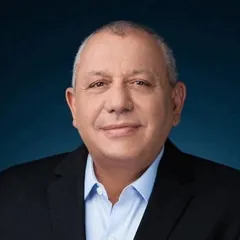
47% chance Gadi Eizenkot
▼1 pt in 7 days
Probability

36% chance Benjamin Netanyahu
▲3 pts in 7 days
Probability
Naftali Bennett 10% · Avigdor Lieberman 2%
The percentages on electiontracker.eu are market-implied probabilities: how likely each outcome is, as priced by prediction markets. They are not polls and not our forecast, and they are refreshed every few minutes. How to read these numbers
- Voting day
- Tuesday 27 October 2026
- Polls close
- First results
- Television exit polls when polling stations close; official results by 4 November
- Elected
- All 120 members of the Knesset, Israel's parliament
- Decided by
- Proportional vote for party lists; 3.25% threshold; 61 seats needed to govern
- Next step
- The president must ask a party leader to form a government by 11 November
Who is running
Benjamin Netanyahu is Israel's longest-serving prime minister and leads Likud, the party that heads the right-wing government. He confirmed in June 2026 that he would run again.
Gadi Eisenkot, a former army chief of staff, leads Yashar, a centrist party formed on 16 September 2025. He resigned from Netanyahu's war cabinet in June 2024. He calls for an inquiry commission into the Hamas-led attacks of 7 October 2023.
Naftali Bennett, a right-wing politician, and Yair Lapid, a centrist, are both former prime ministers. Their parties announced the joint list Together in April 2026, with Bennett at its head. Smaller parties include Shas, an ultra-Orthodox party; Otzma Yehudit, the party of far-right National Security Minister Itamar Ben-Gvir; and The Democrats, a left-wing party led by Yair Golan.
How the vote works
Voters choose one party list, not a candidate. The whole country is a single electoral district. The 120 seats are shared out in proportion to the votes, among the lists that win at least 3.25% of the valid votes. Voters have a choice of 38 lists.
A government needs the support of 61 members. No party has ever won that many alone, so parties form coalitions. Most polling stations are open from 7:00 to 22:00 local time. About 7.56 million Israelis are eligible to vote.
How the race got here
The Knesset dissolved on 17 July 2026 after a full four-year term, the first it has completed since 1988. The election date of 27 October was set by law.
On 23 September the Central Elections Committee, the body that registers the party lists, barred the two Arab-led lists, Ra'am and the Joint List, and two candidates.
On 2 October the Supreme Court unanimously overturned the ban on both lists. It ruled 7-2 that Ofer Cassif, a member of parliament from the Joint List, may run. The other barred candidate, Sami Abu Shehadeh, head of the Balad party, withdrew from the race. On 4 October the court rejected a petition by The Democrats to remove Otzma Yehudit and its leader Itamar Ben-Gvir from the ballot.
What happens next
Television channels publish exit polls when polling stations close. The Central Elections Committee will publish official results by 4 November.
President Isaac Herzog then consults the leaders of the elected parties. By 11 November he must give one of them the mandate to form a coalition of at least 61 members. That person has up to four weeks. The outgoing government stays in office until a new one is formed.
Latest news
- Israel's Supreme Court ruled 7-2 that Hadash-Ta'al MK Ofer Cassif may run in the Knesset election, rejecting his disqualification. The Jerusalem Post
- Balad leader Sami Abu Shehadeh withdrew from the Knesset race after the Supreme Court advised him to drop out; other Arab lists were restored to the ballot. Al Jazeera
- Israel's Supreme Court unanimously overturned the disqualification of the Joint List and Ra'am; Balad leader Sami Abu Shehadeh withdrew from the race. Al Jazeera
- The Central Elections Committee approved 38 candidate lists for the Knesset election and published their ballot letters. Ynet
- Parties met the deadline to submit candidate slates for the 27 October Knesset election, with 38 lists filed with the Central Elections Committee. Al Jazeera
- Parties submitted 38 candidate lists to the Central Elections Committee before the deadline for the October 27 Knesset election. Al Jazeera
Summarised automatically from the linked sources. Al Jazeera · Al Jazeera (2) · Al Jazeera (3) · The Jerusalem Post · The Jerusalem Post (2) · Center for Israel Education · Wikipedia · Israel.com