 Deutsch
 Français
 Italiano
 Español
 Polski
 Nederlands
 Română
 Čeština
 Українська
 Português (Portugal)
 Ελληνικά
 Slovenčina
 Magyar
 Dansk
Dansk Lietuvių
 Türkçe
 Bahasa Indonesia
 Русский
 한국어
한국어 日本語
日本語 繁體中文
繁體中文 العربية
 فارسی
فارسی Português (Brasil)
 עברית
עברית Srpski
President Barrow seeks third term in Gambia election on 5 December
Updated
Gambia elects its president on 5 December 2026 in a single round with no runoff. President Adama Barrow seeks a third term against Ousainou Darboe, the opposition leader he beat in 2021, and Talib Ahmed Bensouda, a mayor who left Darboe's party.
- Saturday · in 52 days
- Polls close · Sat, GMT
- 5,000voter signatures a candidate needs
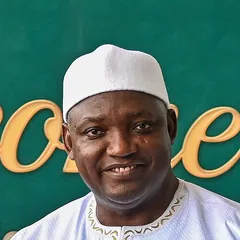 Adama BarrowNational People's Party (NPP)President since 2017
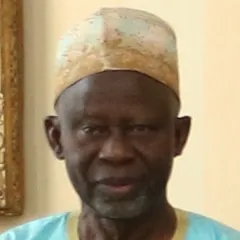 Ousainou DarboeUnited Democratic Party (UDP)Leader of the largest opposition party
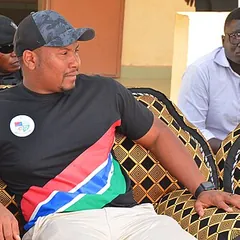 Talib Ahmed BensoudaUNITEMayor of the Kanifing municipality
- Voting day
- 5 December 2026
- Polls close
- First results
- Counted at each polling station after voting ends
- Elected
- The president, for a five-year term
- Decided by
- One round: the candidate with the most votes wins, with no runoff
- Takes office
- January 2027; the current five-year term began on 19 January 2022
Who is running
Adama Barrow has been president since 2017. He defeated Yahya Jammeh, who had ruled since 1994, in the election of 2016, and won a second term in December 2021. He leads the National People's Party (NPP), which he set up after leaving the United Democratic Party. The NPP campaigns on infrastructure, peace and economic growth.
Ousainou Darboe leads the United Democratic Party (UDP), the largest opposition party, founded under Jammeh's rule. It campaigns on constitutional reform, democratic government and accountability. The UDP named Darboe its candidate in September 2025.
Talib Ahmed Bensouda is the mayor of the Kanifing municipality. He left the UDP and founded UNITE, a party registered on 1 July 2026. It presents itself as a youth-focused, technocratic alternative and promises decentralised government, digital reform of the economy and jobs. An opposition grouping, Coalition 2026, chose him as its candidate on 8 August 2026.
How the vote works
The president is elected in one round. The candidate with the most votes wins, even with less than half of them. There is no runoff.
Gambians vote with marbles, not paper ballots. Each voter drops one marble into a metal drum that carries the chosen candidate's party colour, photograph and symbol. Polling stations open at 8 a.m. and close at 5 p.m. local time.
Only the president is elected on 5 December. The National Assembly, the country's parliament, is elected on 10 April 2027.
How the race got here
The constitution of 1997 allows a president a third term. The National Assembly rejected drafts of a new constitution with a two-term limit in 2020 and on 7 July 2025. In 2025, 35 members voted for the draft and 21 against, short of the three quarters required.
Barrow announced early in 2025 that he would run again. The Independent Electoral Commission (IEC), which runs elections, set the voting day on 9 October 2025.
On 14 August 2026 the UDP and allied parties and movements signed a memorandum of understanding for a separate alliance, the Gambia First Coalition.
What happens next
- Nominations open
- Nominations close
- The campaign begins
- The campaign ends
- Voting day
The IEC accepts nominations from 3 to 14 November 2026. A candidate needs the signatures of at least 5,000 registered voters and a deposit of 1 million dalasis, the Gambian currency. Only then is the list of candidates final.
The campaign runs from 16 November to 3 December 2026. 4 December is a cooling-off day without campaigning.
The marbles are counted at each polling station after it closes on 5 December.Barrow's current five-year term began on 19 January 2022, so the next term starts in January 2027.
Related races
- Gambia Presidential Election Winner
 Adama Barrow 73%
Summarised automatically from the linked sources. Dakaractu · Dubawa · The Point · The Point (2) · Malagen · Gambiana · Al Jazeera · Anadolu Agency
Photo: Adama Barrow: Марсель Бадышкин, CC BY 4.0, Wikimedia Commons (cropped) · Ousainou Darboe: Foreign and Commonwealth Office, CC BY 2.0, Wikimedia Commons (cropped) · Talib Ahmed Bensouda: "saidylee!", CC BY-SA 4.0, Wikimedia Commons (cropped)


