 Deutsch
 Français
 Italiano
 Español
 Polski
 Nederlands
 Română
 Čeština
 Українська
 Português (Portugal)
 Ελληνικά
 Slovenčina
 Magyar
 Dansk
Dansk Lietuvių
 Türkçe
 Bahasa Indonesia
 Русский
 한국어
한국어 日本語
日本語 繁體中文
繁體中文 العربية
 فارسی
فارسی Português (Brasil)
 עברית
עבריתSpain to hold early general election on 29 November
Voting day: (in 53 days) · Updated
Spain votes on 29 November 2026 in an early general election for all 350 seats in the Congress of Deputies and most of the Senate. Prime Minister Pedro Sánchez called it on 5 October, three days after Congress rejected two housing decrees of his minority government.
Spain General Election
Sunday, November 29, 2026 · in 53 days

Prime Minister of Spain?
Sunday, November 29, 2026 · in 53 days
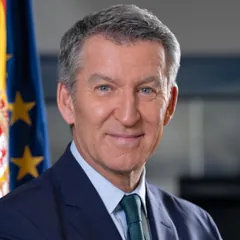
80% chance Alberto Núñez Feijóo
▲1 pt in 7 days
Probability
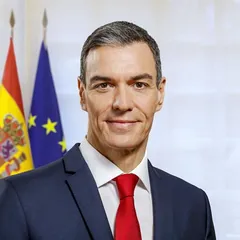
19% chance Pedro Sánchez
▲5 pts in 7 days
Probability
Santiago Abascal 1%
The percentages on electiontracker.eu are market-implied probabilities: how likely each outcome is, as priced by prediction markets. They are not polls and not our forecast, and they are refreshed every few minutes. How to read these numbers
- Voting day
- 29 November 2026
- Polls close
- Elected
- All 350 members of the Congress of Deputies and most of the Senate
- Decided by
- 176 of the 350 seats in Congress are a majority; Congress then votes on the prime minister
- Campaign
- 13 to 27 November 2026
- New parliament meets
- By 24 December 2026
Who is running
Pedro Sánchez, 54, has been prime minister since 2018 and seeks another term. He leads the Spanish Socialist Workers' Party (PSOE) and governs in a minority coalition with Sumar, a left-wing party. He said he wants a broader progressive majority in parliament to act on housing.
Alberto Núñez Feijóo leads the conservative People's Party (PP), the main opposition party, which holds the most seats in Congress. Santiago Abascal leads Vox, a far-right party that campaigns under the slogan of national priority and blames immigration for the housing crisis.
Sumar and three allied left-wing parties plan to run together as the Broad Front. They set 17 October to launch the alliance and had not named a lead candidate when the election was called.
How the vote works
Voters elect all 350 members of the Congress of Deputies, the lower house of parliament, and most members of the Senate, the upper house. Each of the 50 provinces is a constituency. Voters choose a party list, and seats in Congress are shared out in each province in proportion to the votes.
Polling stations are open from 9:00 to 20:00. Voters do not elect the prime minister directly: the new Congress does, and 176 seats make a majority there. Postal votes can be requested until 19 November.
How the race got here
The election was due in 2027. On 2 October, Congress rejected two housing decrees from the government. PP, Vox and Junts, a Catalan pro-independence party, voted against them. The decrees would have extended protection against evictions, prolonged rental contracts and banned home purchases by speculative investment funds until 2028.
The government announced the decrees after the eviction of an 87-year-old woman from her home in Madrid, which set off housing protests across Spain. Sánchez announced the election on 5 October.
In the summer of 2026, tens of thousands of migrants crossed from Morocco into Ceuta, a Spanish city in North Africa. Court cases also involve Sánchez's party, his wife and his brother, who all deny wrongdoing.
What happens next
The official campaign runs from 13 to 27 November. No campaigning is allowed on 28 November. The new Congress and Senate must be constituted by 24 December.
The King then consults the parties in parliament and nominates a candidate for prime minister. The candidate needs an absolute majority in Congress, or a simple majority in a second vote 48 hours later. If no candidate wins the confidence of Congress within two months of the first vote, both houses are dissolved and a new election is called. The outgoing government stays in office until the new one takes over.
Summarised automatically from the linked sources. La Moncloa · La Moncloa (2) · Associated Press · Catalan News · Ara · RTVC · El Debate · Wikipedia