 Deutsch
 Français
 Italiano
 Español
 Polski
 Nederlands
 Română
 Čeština
 Українська
 Português (Portugal)
 Ελληνικά
 Slovenčina
 Magyar
 Dansk
Dansk Lietuvių
 Türkçe
 Bahasa Indonesia
 Русский
 한국어
한국어 日本語
日本語 繁體中文
繁體中文 العربية
 فارسی
فارسی Português (Brasil)
 עברית
עברית Srpski
Tinubu faces Atiku and Obi in Nigeria's election on 16 January 2027
Voting day: (in 95 days) · Updated
Nigeria elects its president on 16 January 2027, on the same day as the National Assembly. President Bola Tinubu seeks a second term against 17 other candidates, among them former vice-president Atiku Abubakar and former state governor Peter Obi.
Nigerian Presidential Election
Saturday, January 16, 2027 · in 95 days
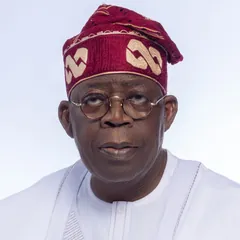
74% chance Bola Tinubu
▲3 pts in 7 days
Probability
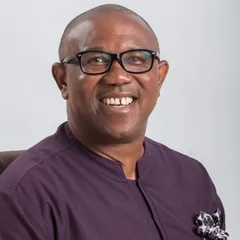
21% chance Peter Obi
▼4 pts in 7 days
Probability
Omoyele Sowore 1%
The percentages on electiontracker.eu are market-implied probabilities: how likely each outcome is, as priced by prediction markets. They are not polls and not our forecast, and they are refreshed every few minutes. How to read these numbers
- Voting day
- 16 January 2027
- Polls close
- First results
- Each polling unit's result is uploaded to the electoral commission's results portal
- Elected
- President and vice-president; the National Assembly on the same day
- Decided by
- Most votes and a quarter of the vote in two-thirds of the states, or a second election within 21 days
- Current term ends
- 28 May 2027
Who is running
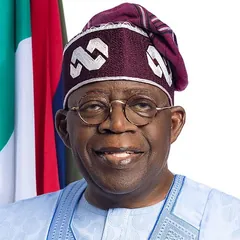 Bola Tinubu
President Bola Tinubu, 74, seeks a second term for the All Progressives Congress (APC), the governing party. His running mate is Vice-President Kashim Shettima. His campaign points to the removal of the petrol subsidy and to foreign exchange reforms. Opposition parties criticise the effect of these policies on the cost of living.
Atiku Abubakar, 79, a former vice-president, is the candidate of the African Democratic Congress (ADC), the party around which an opposition coalition was built. His running mate is Rotimi Amaechi, 61, a former governor of Rivers State and former transport minister.
Peter Obi, 65, a former governor of Anambra State, runs for the Nigeria Democratic Congress (NDC), another opposition party. His running mate is Rabiu Kwankwaso, 69, a former governor of Kano State. Omoyele Sowore, 55, stands for the African Action Congress (AAC). The Independent National Electoral Commission (INEC), which runs the election, lists 18 candidates in all.
How the vote works
The winner needs the highest number of votes and at least a quarter of the votes in two-thirds of the states and in the Federal Capital Territory. If no candidate meets both conditions, the constitution requires a second election within 21 days.
Polling units open at 8:30 a.m. and close at 2:30 p.m. local time. Voters in the queue at that hour may still vote. There are 176,846 polling units, and the register holds about 103 million voters. The National Assembly, the federal parliament, is elected on the same day.
How the race got here
President Tinubu signed a new Electoral Act on 18 February 2026. On 26 February 2026 INEC moved the election from 20 February 2027 to 16 January 2027 and said the new law had changed the legal deadlines. Muslims had raised concerns that the earlier dates would fall in the fasting month of Ramadan.
The ADC announced on 27 May 2026 that Atiku Abubakar had won its primary with 1,846,370 votes, ahead of Rotimi Amaechi with 504,117. Amaechi rejected the result at first and later became the running mate. Peter Obi and Rabiu Kwankwaso had joined the ADC coalition but left it for the NDC. The APC had nominated Tinubu the weekend before.
Campaigning began on 19 August 2026 and must end 24 hours before election day. INEC published the final list of candidates on 12 September 2026.
What happens next
INEC says the result of each polling unit will be uploaded to its results portal, called IReV.
Elections for state governors and state assemblies follow on 6 February 2027. The current presidential term expires on 28 May 2027.
Summarised automatically from the linked sources. Independent National Electoral Commission · Arise News · Arise News (2) · Premium Times · Voice of Nigeria · International Centre for Investigative Reporting · International Centre for Investigative Reporting (2) · Daily Trust
Photo: Bola Tinubu: Nosa Asemota, CC BY-SA 4.0, Wikimedia Commons (cropped)
